
If your Roseville home never seems to reach the thermostat setpoint — no matter how long the AC runs — and your energy bills keep climbing every summer, duct leakage testing Roseville homeowners rely on is the fastest way to find out exactly why. California data shows the average Sacramento Valley home loses 20–30% of its conditioned air through duct leaks before it ever reaches the living space. In Roseville’s hot inland climate, where the cooling season stretches five to six months, that waste translates to hundreds of dollars every year in energy you paid for but never felt.
This guide explains exactly what duct leakage testing measures, how the results translate into real savings for Roseville homeowners, what the test process looks like from start to finish, and what duct sealing involves when the test identifies a problem worth fixing. Every section is built around one goal: giving you the information you need to make a confident decision about whether this test makes sense for your home and your cooling budget.
In This Article
- Why Roseville Cooling Bills Are So High
- What Duct Leakage Is and What It Costs
- 5 Proven Ways Duct Testing Cuts Roseville Cooling Bills
- How Duct Leakage Testing Works: Step by Step
- California Title 24 Leakage Thresholds Explained
- What Duct Sealing Involves After the Test
- Real Savings Roseville Homeowners Can Expect
- 8 Warning Signs Your Ducts Are Leaking
- Preparing for Your Test Visit
- Frequently Asked Questions
- Schedule Your Roseville Duct Test
Why Roseville Cooling Bills Are So High
Roseville sits squarely in the Sacramento Valley heat belt. Temperatures regularly exceed 100°F from June through September, and the cooling season often stretches into October. Running air conditioning for five to six months per year is not optional — it is a basic comfort requirement. PG&E’s tiered pricing structure compounds the problem: every inefficiency in your HVAC system pushes usage into higher rate tiers, where every additional kilowatt-hour costs more than the one before it.
Many Roseville homes — including newer ones in master-planned communities like Fiddyment Farm, West Park, and Crocker Ranch — have duct systems that were never properly sealed at installation, or that have developed leaks through years of thermal expansion and contraction in extreme attic environments. Roseville attics regularly reach 150–160°F in summer. Flex duct exposed to those temperatures for years develops small tears and loose connections that grow over time. When ducts leak into a 160°F attic, your AC cools air that never reaches you — and your thermostat keeps calling for more.
The combination of Roseville’s climate, PG&E’s rate structure, and aging duct infrastructure makes duct leakage one of the highest-impact, most cost-effective energy problems available to address. Unlike some energy upgrades that require significant upfront investment for modest returns, duct testing and sealing on a significantly leaky system typically pays back within one to two cooling seasons.
What Duct Leakage Is and What It Costs You
Your duct system carries conditioned air from the air handler through supply ducts to every room in your home, and returns air back through return ducts for reconditioning. In a perfectly sealed system, all of that conditioned air arrives at its destination. In reality, most Roseville homes have gaps at duct connections, tears in flex duct, or unsealed register boots that allow conditioned air to escape — typically into the attic, which in Sacramento Valley summers operates at temperatures that negate any cooling benefit of escaped air.
Supply duct leaks and return duct leaks create different but equally costly problems. When supply ducts leak, cool air escapes before reaching your rooms. Your thermostat never registers the temperature drop it’s waiting for, so the system runs longer and consumes more electricity. When return ducts leak, your system draws superheated attic air into the return stream and must cool that air before it can do anything useful — wasting energy on every single cycle.
Duct leakage testing Roseville homeowners and contractors rely on measures the exact leakage rate of your system using calibrated equipment — not estimation, but precise measurement that produces a number your HVAC contractor can act on. For more detail on what duct testing reveals across different home types and ages, see our guide on uncovering hidden savings with duct testing.
5 Proven Ways Duct Leakage Testing Cuts Roseville Cooling Bills
1. Quantifies the Exact Problem — No More Guessing
Before a duct test, you know your bills are high but not why. After the test, you have a precise leakage percentage — say, 24% of total system airflow — that directly explains a measurable portion of your energy cost. That precision changes every conversation with your HVAC contractor from guesswork to data. Every subsequent decision — whether to seal, how urgently, which sections to prioritize — becomes measurable rather than intuitive.
2. Unlocks the Highest-Return Energy Upgrade Available
Duct sealing consistently delivers the highest energy savings per dollar invested of any common residential energy upgrade in Sacramento Valley climates. Window replacements, attic insulation upgrades, and smart thermostats all offer real benefits — but none of them address conditioned air escaping the system before it reaches its destination. A home losing 25% of its cooling capacity through duct leaks recovers that capacity directly and immediately after effective sealing. The payback period in Roseville’s five-to-six month cooling season is typically one to two years — often less on systems with significant pre-sealing leakage.
3. Improves Comfort Before the Bill Even Arrives
Rooms that chronically fail to cool — because upstream duct leaks are starving them of supply airflow — begin receiving adequate conditioned air after sealing. Most Roseville homeowners notice the comfort improvement before they receive the first lower utility bill: rooms holding temperature consistently, the system cycling properly, and the house actually feeling like the thermostat setpoint by mid-afternoon instead of perpetually chasing it.
4. Documents Compliance for Permits and Rebates
For Roseville homes with a permitted HVAC project including HERS measures on the CF-1R, duct leakage testing is the official documentation Placer County’s building department requires before finalizing the permit. The same test results support PG&E energy efficiency rebate applications that require verified HERS testing to qualify. One test serves multiple purposes: permit compliance, rebate documentation, and a personal energy efficiency baseline.
5. Establishes a Measurable Baseline for Future Improvements
A documented pre-sealing leakage rate is a data point you can compare against after sealing — and in future years — to understand whether your duct system is holding up or developing new leaks as it ages. For homeowners planning phased energy improvements, duct leakage data is foundational: it tells you whether duct issues should be addressed before investing in equipment upgrades, and gives future contractors a meaningful before/after comparison.
How Duct Leakage Testing Works: Step by Step
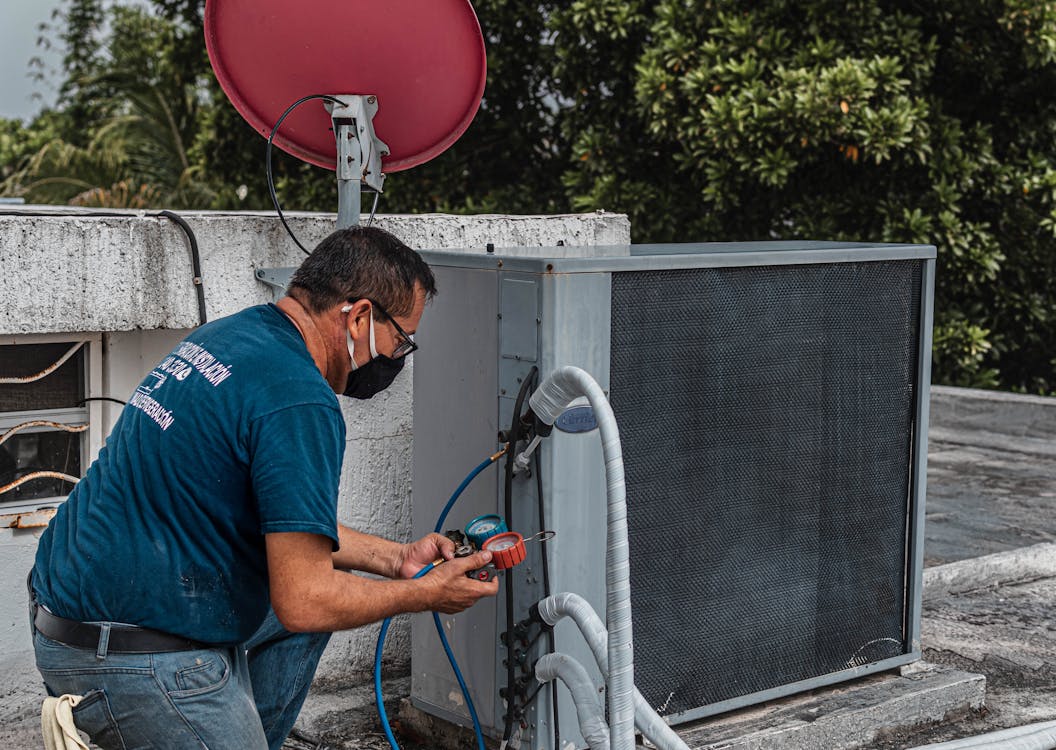
The duct leakage test is performed by a California-certified HERS rater using a device called a duct blaster — a calibrated fan that pressurizes your duct system to a standard test pressure of 25 Pascals. The entire process for a typical single-system Roseville home takes approximately 60–90 minutes, including setup, testing, documentation, and results review. Here is what an Express Duct Test visit involves:
Pre-test walkthrough (10–15 minutes): The rater reviews the home’s duct system layout, identifies the air handler location, and confirms attic accessibility. For permit-required testing, the rater reviews the CF-1R to confirm which specific HERS measures are required.
Register sealing (15–20 minutes): All supply and return registers throughout the home are temporarily sealed with foam plugs or tape. This isolates the duct system from the living space so the test measures only duct leakage — not air moving through the registers themselves.
Fan connection and pressurization (10–15 minutes): The duct blaster fan is connected to the system — typically through the air handler cabinet or an accessible supply register — and used to pressurize the duct system to 25 Pascals, the California Title 24 standard test pressure.
Leakage measurement (5–10 minutes): The airflow rate the fan must maintain to hold 25 Pascals of pressure is measured precisely with calibrated instruments. This flow rate is divided by the system’s rated total airflow to produce the leakage percentage that defines the test result.
Same-day on-site report: Express Duct Test completes all documentation on-site and provides the finished report before leaving your property. For permit-required testing in Roseville and Placer County, the report is ready to submit the same day.
California Title 24 Leakage Thresholds Explained
California’s Title 24 Building Energy Efficiency Standards set maximum allowable duct leakage rates that vary by project type. Understanding which threshold applies to your Roseville project establishes realistic expectations for both the test result and any sealing work that follows.
- New construction — 4% or less: The strictest standard, requiring mastic sealing at every duct connection, boot, and plenum interface during installation. New Roseville subdivision construction must meet this threshold before permit finaling.
- Alteration projects in existing homes: A more relaxed threshold — typically around 15% or less — specified directly in the project’s CF-1R. The applicable standard for your project is always the one listed on the CF-1R.
- Non-permit diagnostic testing: No compliance threshold applies. The test result is compared to California efficiency benchmarks to help homeowners understand how much improvement is achievable and whether sealing investment is cost-justified.
For the full current framework governing California duct efficiency standards, the California Energy Commission Building Standards page is the authoritative reference.
What Duct Sealing Involves After the Test
If your duct leakage test reveals significant leakage — generally above 15% for an existing Roseville home — professional sealing is the recommended next step. Duct sealing is performed by a licensed HVAC contractor. The rater measures and documents; the contractor seals and fixes. Here is what the process typically involves on Roseville residential systems:
Mastic sealant application: A licensed HVAC contractor applies mastic — a paste-like compound that dries to a durable, flexible seal — to all accessible duct connections, joints, and register boot interfaces. Mastic is California’s code-preferred sealing method because it maintains its seal through the extreme thermal cycling Roseville attics experience over years of use.
Metal-backed foil tape: For duct connections where mastic application is impractical, UL-listed metal-backed foil tape supplements mastic sealing. Standard grey “duct tape” is never appropriate for HVAC duct sealing — it degrades rapidly in hot attic environments and fails to hold through thermal expansion and contraction cycles.
Flex duct repair or replacement: In Roseville homes with older flex duct that has developed tears, holes, or completely disconnected sections, repair or section replacement may be necessary in addition to mastic sealing. Your contractor will identify these sections during the sealing process.
Insulation check and correction: Duct sections running through unconditioned spaces — particularly attics — must be wrapped in at least R-6 insulation per current Title 24 requirements. A complete sealing job includes verifying and correcting any sections where insulation has separated or been removed.
Post-sealing retest: After sealing, Express Duct Test returns to confirm the leakage rate now meets the required threshold and document the improvement. We schedule same-day or next-morning retests whenever possible to keep permit timelines intact.
Real Savings Roseville Homeowners Can Expect
The energy savings from duct sealing depend on your starting leakage rate, your home’s square footage, and the length of Roseville’s cooling season. Based on California Energy Commission efficiency data:
- Homes with 20–30% pre-sealing leakage typically see cooling energy reductions of 15–25% after professional mastic sealing
- Homes with 10–20% pre-sealing leakage typically see 8–15% cooling energy reductions
- In a Roseville home spending $250–350/month on electricity in peak summer months, a 20% reduction saves $50–70 per month — $250–420 over a full five-month cooling season
- Most Roseville homeowners recover the combined cost of the duct test and professional sealing within one to two cooling seasons
Beyond direct energy savings, properly sealed ducts improve room-to-room comfort consistency, reduce indoor dust levels from eliminated attic air infiltration, and extend HVAC equipment life from reduced run hours. For a broader view of how HERS-guided improvements compound across multiple upgrades, see our article on HERS as the key to a greener, more efficient home.

8 Warning Signs Your Roseville Home Has Leaky Ducts
- Energy bills that seem high relative to home size. If neighbors in similar Roseville homes consistently pay less for cooling, leaky ducts are a common explanation — especially during peak summer months.
- Rooms that never reach the set temperature. A bedroom, home office, or room at the end of the duct run that always feels warmer than the rest of the house often has supply ducts losing airflow before it arrives.
- Long AC run cycles without reaching setpoint. A system running 45+ minutes without the thermostat registering the target temperature is usually fighting a refrigerant issue or significant duct leakage — both diagnosable by a HERS rater.
- Visible duct issues in the attic. Sagging flex duct, kinked sections, or flex duct disconnected from a boot or plenum are direct evidence of leakage costing you money every cooling cycle.
- Excessive indoor dust. Return duct leaks pull dust, insulation particles, and attic contaminants into the return stream. If your home seems unusually dusty despite regular cleaning, return duct leakage is a likely contributor.
- Pre-2006 home or legacy duct system. Roseville homes built before 2006 were permitted under far looser duct sealing standards. Many have never been tested or upgraded.
- New equipment on old ducts. A recently replaced air handler or condenser operating on a legacy duct system inherits all of that system’s leakage problems. New equipment cannot compensate for ducts that lose 20–25% of output before it reaches the living space.
- Permit-required HVAC work with HERS testing on the CF-1R. If your Roseville building permit includes duct leakage testing as a required HERS measure, the test is already mandatory — understanding what it measures helps you prepare and pass it efficiently.
Preparing for Your Duct Leakage Test Visit
Getting the most from your visit requires minimal preparation. Before the rater arrives, confirm that your HVAC system is fully operational and the air handler is accessible without moving stored items. Confirm that the attic hatch is accessible and safe to enter — this is where most visual duct inspection occurs during the test. If the hatch is blocked by stored items, clear it before the appointment.
If you have documentation from previous HVAC service — refrigerant charge records, prior duct test results, or the CF-1R from a recent permit — have those available for the rater to review. For permit-required testing, having the CF-1R on hand allows the rater to confirm which specific HERS measures the project requires before testing begins, which keeps the visit on schedule and ensures the right documentation is produced.
Frequently Asked Questions About Duct Leakage Testing Roseville
How long does a duct leakage test take in Roseville?
For a typical single-story Roseville home with one HVAC system, the complete test visit takes approximately 60–90 minutes from arrival to report delivery. Homes with two-zone or multi-system configurations take proportionally longer. Express Duct Test provides estimated visit durations when you schedule so you can plan accordingly.
Do I need to be home during the test?
Someone with access to the home needs to be present. For homeowner-requested diagnostic testing, this is typically the homeowner. For permit-required contractor-requested testing on a vacant home under construction, the contractor or their representative must be on-site. The rater needs access to all registers, the air handler, and the attic.
What if my system passes the test?
A passing result is valuable information — it tells you duct leakage is not the source of your cooling inefficiency and focuses the next diagnostic step elsewhere (refrigerant charge, equipment sizing, insulation, or air infiltration). Express Duct Test provides a written report documenting the actual leakage percentage regardless of whether the system passes or fails.
Can I combine a duct test with refrigerant charge verification?
Yes. Express Duct Test can combine duct leakage testing with refrigerant charge verification and airflow measurement on a single visit. For Roseville homes where multiple HERS measures are listed on a permit CF-1R, combining them in one visit keeps your project on schedule and minimizes disruption.
Schedule Your Roseville Duct Leakage Test Today
Express Duct Test is a certified HERS rating company serving Roseville and the greater Sacramento Metropolitan Area — including Sacramento, Rio Linda, Antelope, Rocklin, Fair Oaks, Folsom, Carmichael, North Highlands, and surrounding Placer and Sacramento County communities. Our certified raters deliver accurate, same-day results whether you need testing for a Placer County building permit or simply want to understand exactly where your cooling dollars are going.
Stop paying to cool air that never reaches your rooms. If you recognize any of the warning signs above, or if your Roseville permit requires HERS testing, the next step is a single phone call.
Call or text us today at (916) 289-1211 to schedule your duct leakage test in Roseville and find out exactly what your cooling system is costing you.